
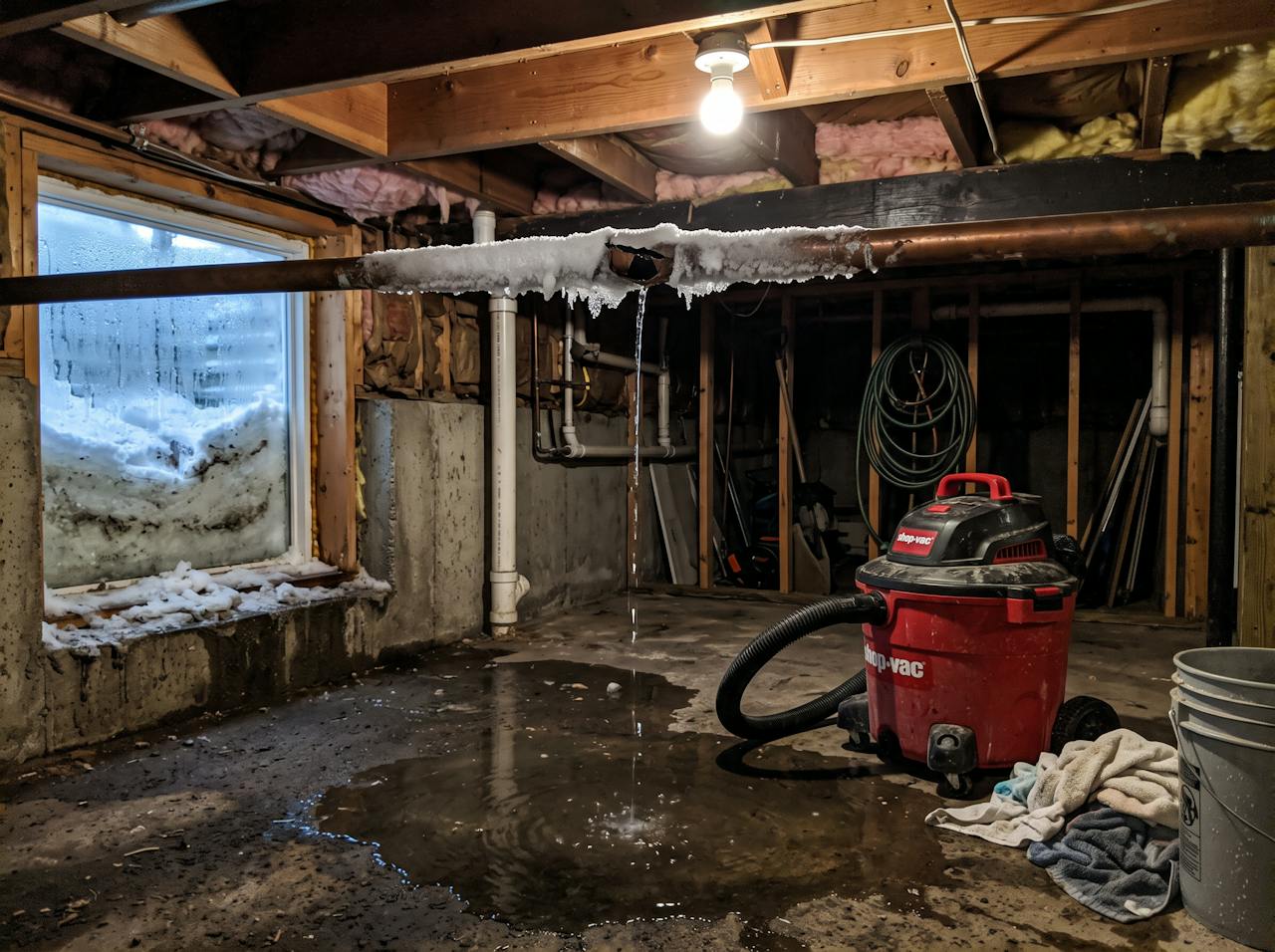
A neighbor of mine, not too far from me, went away for the winter. The pipes froze. Then they burst.
It’s terrible. It’s terrible to lose everything.
This is winter on Long Island. It’s the most important time of year to pay attention to your pipes. So here’s what I’d do.
If a pipe bursts, shut off the main. Immediately.
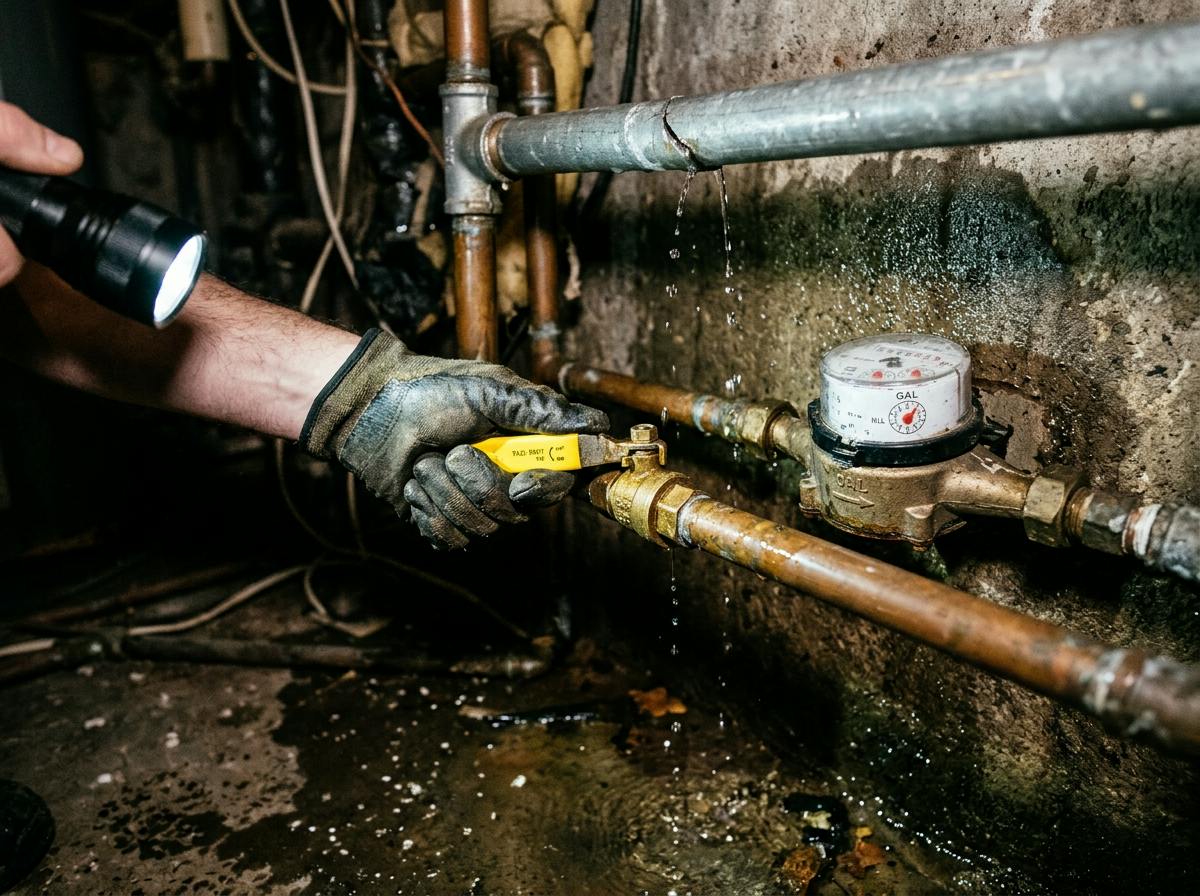
Not in five minutes. Not after you call somebody. Now.
A burst pipe keeps pushing water until you stop it, and it can be leaking everywhere, inside walls, under floors, down into the basement. The main shutoff valve stops all of it.
So find your main shutoff today, before you need it. Walk over to it. Make sure it actually turns. Show everybody in the house where it is.
I keep a wet vac too. I live in a condo, so if something goes, there’s going to be water damage either way. But the faster you shut the water off and start sucking it up, the less you lose.
Going away? Leave the heat on.
Please. Do not turn the heat off to save a few bucks while you’re gone. That’s how my neighbor’s house got wrecked.
The Red Cross says if you’re going away in cold weather, leave the heat on, set no lower than 55°F.
They also say to keep the thermostat the same day and night when it’s really cold. Your heating bill might go up a little. A burst pipe costs a whole lot more.
If you have a smart thermostat, use it. You can check on it from your phone while you’re away. This is not the time to screw around.
When it gets really cold
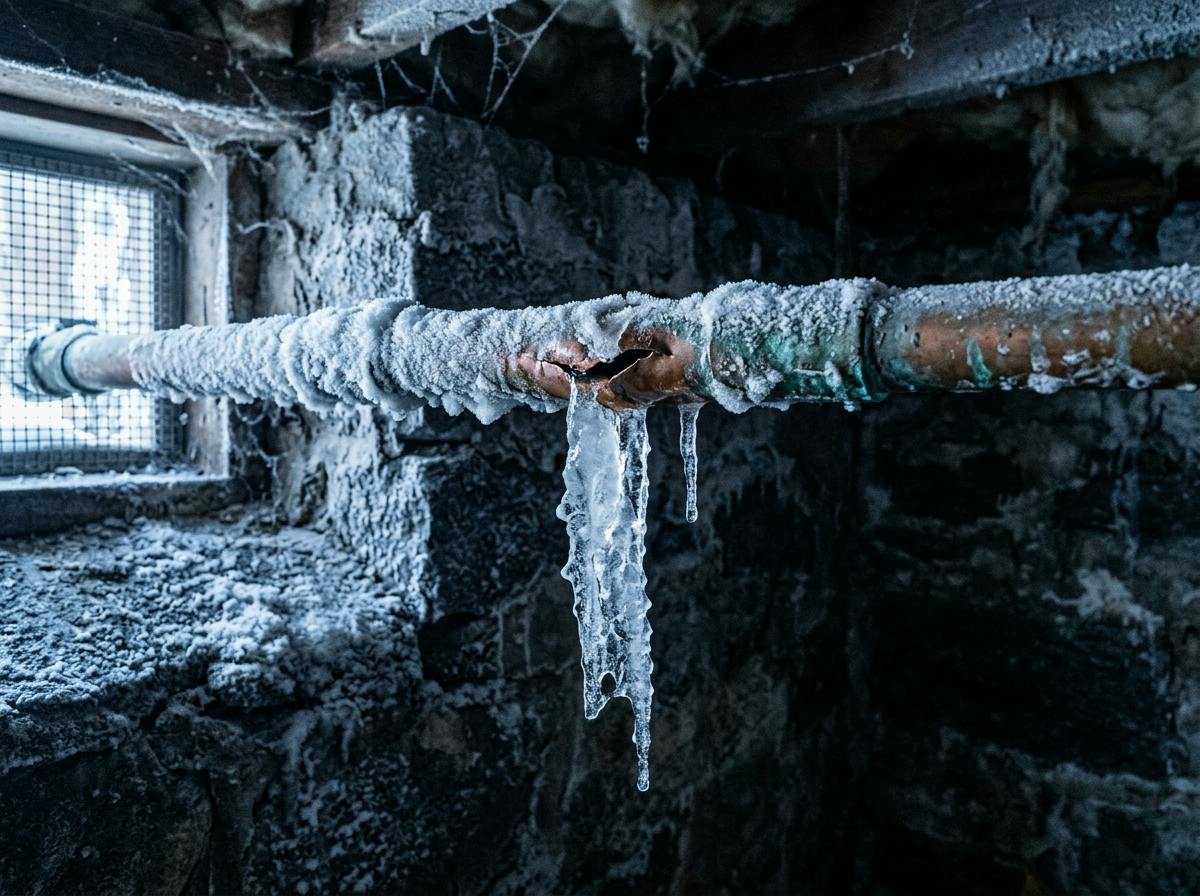
Two cheap tricks from the Red Cross:
- Open the cabinet doors under your kitchen and bathroom sinks so warm air gets to the pipes. Move any cleaning chemicals out of reach of kids first.
- Let the cold water drip from faucets on pipes that run along outside walls. Even a trickle helps keep the pipe from freezing.
Buy yourself some time
Here’s the thing, folks. If water can be in it, it can leak. Pipes, sinks, washers, fridges, all of it.
You can’t stop every leak. But you can catch it early. Here’s what I use or would use:
- Water leak sensors. Little alarms you put on the floor. They go off when they sense water. They’re not expensive.
- Automatic shutoff valves. Some of them shut the water off on their own when a sensor detects a leak. You can have one installed, or do it yourself if you’re handy.
- A mat under your kitchen sink. I got mine on Amazon for around 10 or 12 bucks. It catches a little water and buys you time before the sensor goes off.
- Braided washer hoses. Old rubber hoses wear out. A home inspector I read recommends swapping rubber hoses every five years and says braided stainless steel ones hold up much better.
My fridge story
We had our refrigerator’s ice maker just quit on us. It leaked and left a pool of water under the fridge. We dried it, but it had already gone down below.
Here’s my honest take, and nobody in the store will tell you this.
Fridges today have Wi-Fi, screens, ice makers, water dispensers, all of it. More stuff means more things that can break, and more water lines that can leak. Someone told me the old basic fridges lasted so long because they only did a couple of things. I believe it.
Do you really need the fridge to make ice? You can make ice in the freezer. I love tech. I’m a tech nerd. But I want a big fridge with the basic functions. I don’t need it to make me a cappuccino or say good morning or tell me my schedule.
Keep it simple. Fewer water lines, fewer problems.
Bottom line
Know where your main shutoff is, and leave the heat on when you’re away. Then put a couple of cheap sensors where water lives, and swap those old rubber washer hoses while you’re at it.
And if a pipe does burst at 3 AM and you have to call someone, ask what they usually charge before you say anything about your house. And here’s what’s fair to pay after hours.
Sources: American Red Cross, Frozen Pipes, Structure Tech Home Inspections, Rubber Washing Machine Hoses.
2 thoughts on “Your Pipes Don’t Know You’re on Vacation”
Comments are closed.