
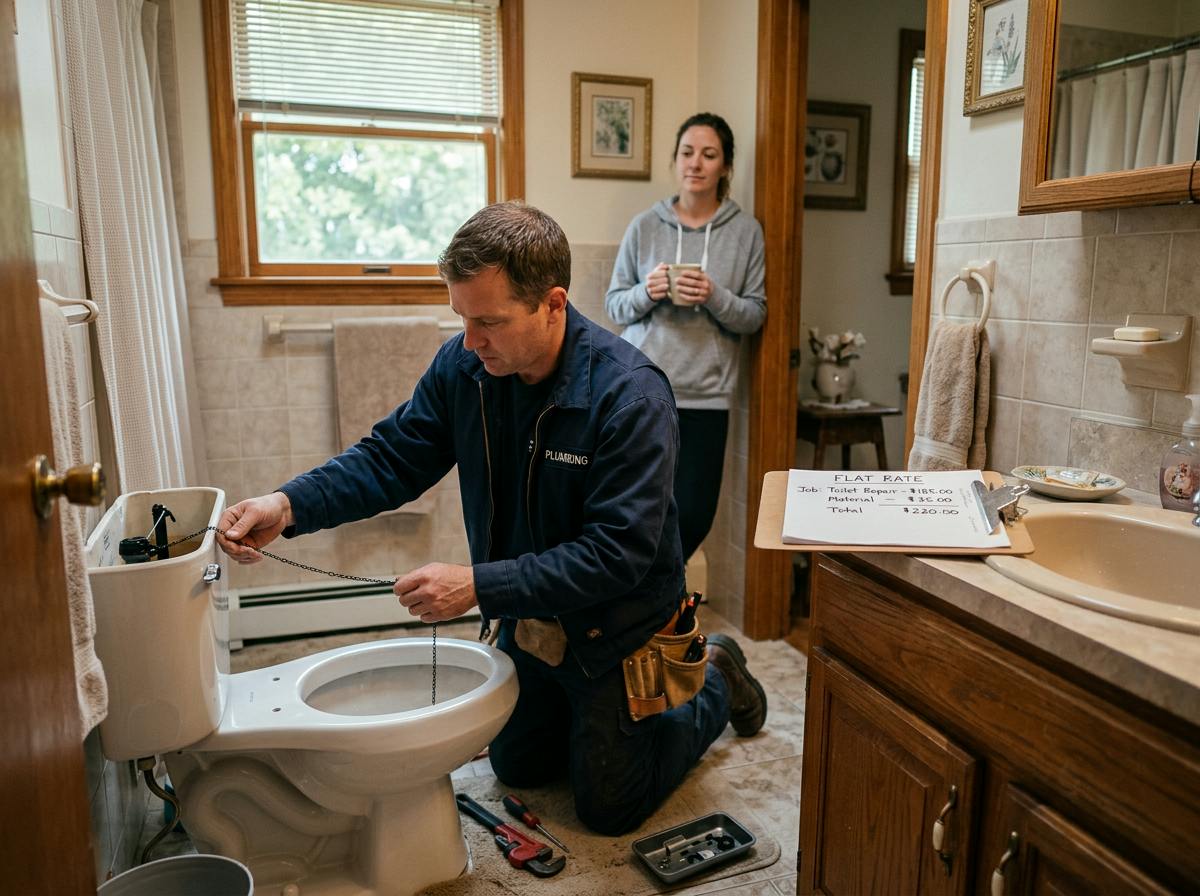
The last plumber who fixed my toilet had to come back. Water was still running into the bowl. He looked at it, fiddled for a minute, and told me there was nothing wrong. Nothing wrong. The water was still running.
I don’t think he was a bad plumber. I think he was a rushed plumber. He had three more calls after mine and his head was already in the next driveway. And that’s the part nobody talks about when you ask, “Do you charge flat rate or by the hour?” The way you pay changes how the job gets done.
What’s the difference, in plain English?
- Flat rate: You get one price for the job before anybody touches a wrench. Clogged toilet, one number. Done. If it takes him 20 minutes or 90 minutes, you pay the same.
- Hourly (time and materials): You pay for the time on the clock plus parts. Fast job, small bill. Slow job, bigger bill.
- Project price: For big stuff, a written quote for the whole job, usually after somebody actually looks at it.
For simple jobs, I want flat rate. Here’s why.
When it’s a clogged toilet, a running toilet, a dripping faucet, I’d rather just pay a flat rate. Because then the guy has no reason to rush, and no reason to drag it out either. The price is the price. He can take his time and do it right.
I’d rather have the job done right once than done fast twice.
With hourly on a small job, you’re stuck in a weird spot. If he’s fast, great, but fast is how my flapper chain ended up not connected. If he’s slow, you’re standing in the hallway watching the clock and wondering if he’s slow on purpose. Neither one feels good.
And here’s the thing. It’s not that plumbers today are incompetent. Most of them know what they’re doing. But they’re busy, they’re running from call to call, and you have to be on people more than you used to. Flat rate takes one thing off the table.
For floods and big jobs, hourly or a project price makes sense
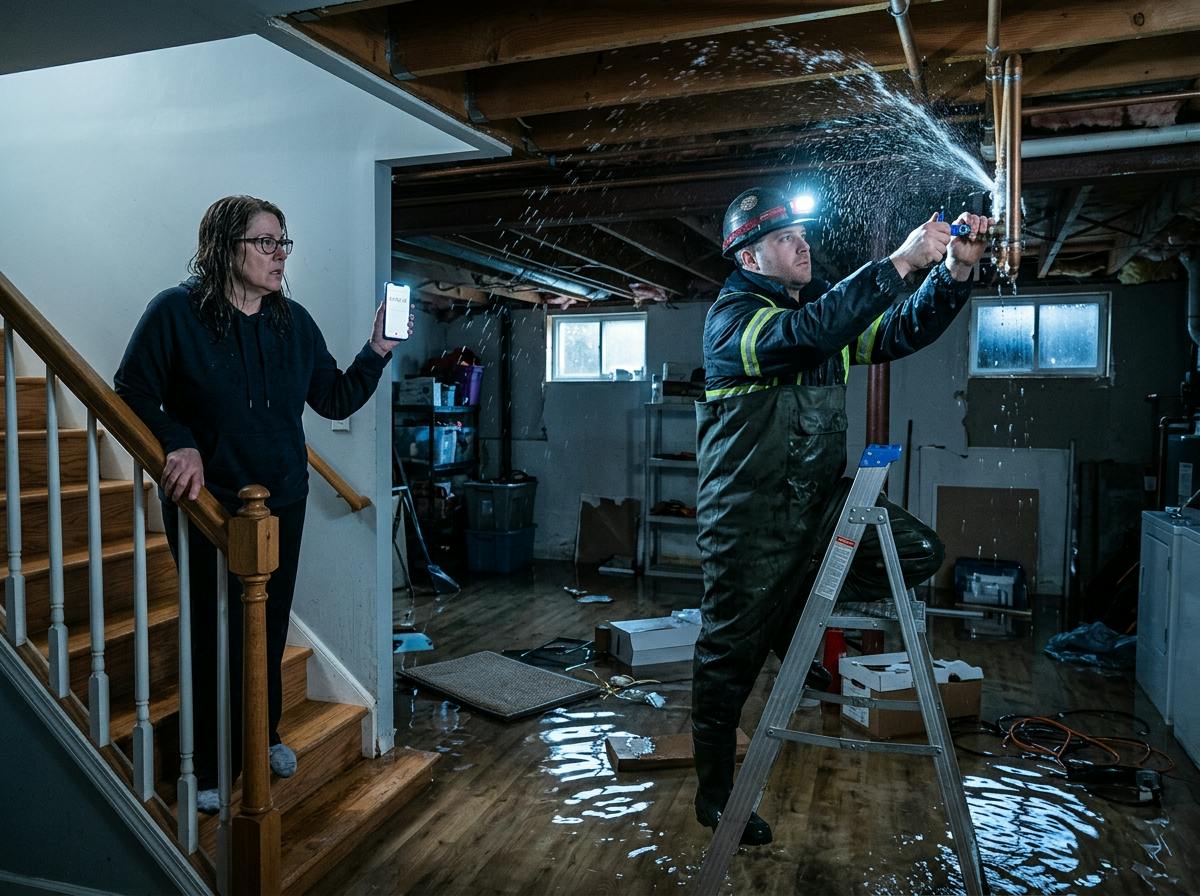
Now flip it. Your basement is under water, or a pipe let go inside a wall. Nobody can honestly give you a flat price on the phone for that. It depends on how big the house is, how big the leak is, how much they have to open up, what parts they need. That could be two hours or it could be six or seven.
For those jobs, hourly or a project quote is fair. Just don’t go in blind:
- Ask what the hourly rate is, and whether there’s a minimum or a trip charge.
- Ask when the clock starts. When they leave their shop? When they pull in your driveway?
- Ask them to call you before they go past a set number, like “check with me before it goes over $800.”
- Get the parts listed separately so you can see what you’re paying for.
Whatever they quote, get it in writing
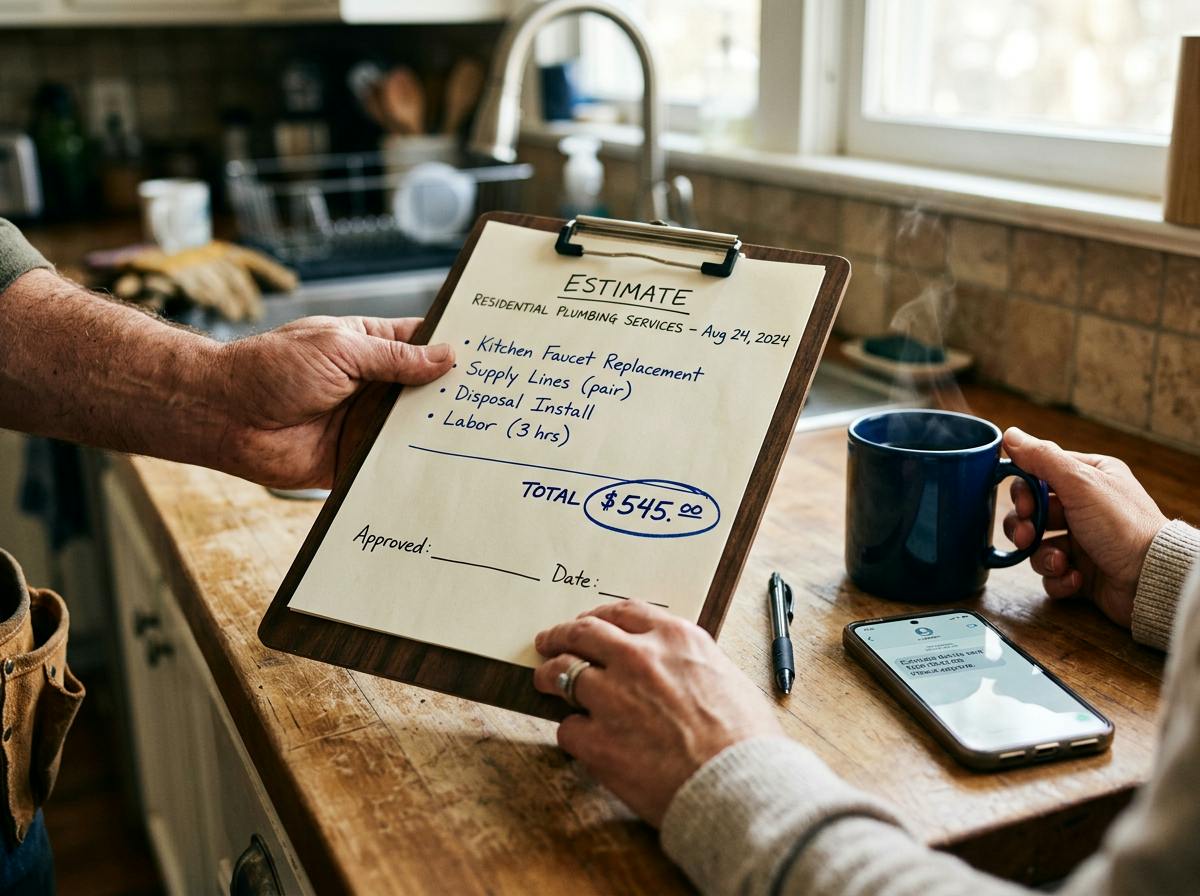
This is the part I care about most. Flat rate, hourly, project, I don’t care which. Get the number in writing before the work starts. A text counts. A note on the invoice counts. Something.
For bigger jobs, New York actually backs you up on this. The NY Attorney General’s home improvement fact sheet says most home improvement work over $500 needs a written contract in plain English, with the price, a description of the work and materials, rough start and finish dates, and a notice that you can cancel until midnight of the third business day. Not every emergency repair is going to fit neatly into that, but it tells you what “normal” looks like for a real job.
Quick cheat sheet
- Clogged toilet, running toilet, leaky faucet, simple drain: ask for a flat rate.
- Flood, burst pipe, water heater swap, anything inside a wall: hourly or a written project quote, with a cap you agree on.
- Either way: price before work, in writing, and ask if there’s a warranty or a free callback if it’s not fixed.
- If it’s 3 AM: expect to pay more, but not triple. More on that in our 3 AM pricing guide.
Ask about the callback before they leave
My toilet story would’ve been a lot less annoying if I’d asked one question before he left: “If this is still running tomorrow, do you come back free?” A good plumber will say yes without blinking. If he hems and haws, that tells you something.
And while he’s there, it’s fair to ask who’s actually doing the work and whether they’re licensed. I wrote about that in the sidekick article. If you’re getting a different price than your neighbor for the same job, read the nice-house tax too.
Flat rate for the small stuff. Fair clock for the big stuff. Everything in writing. Do it right once.
Related: Called about one thing and got pitched five more? Here’s how to tell a heads-up from an upsell.